
Gutters Cleared to the Downspout Outlet
Gutter cleaning in Baton Rouge for systems blocked by leaf debris, pine straw, seed pods, and compacted silt
Baton Rouge's residential tree canopy—dominated by live oaks and pines that shed year-round rather than in a single fall season—deposits a continuous layer of debris into gutters that accumulates faster than most homeowners expect. Gator Gutter Service cleans gutters across Baton Rouge by removing all debris by hand and with specialized tools, flushing remaining silt and shingle granules from the gutter channel, and running water through each downspout from the top opening to the outlet at grade to confirm unobstructed flow away from the foundation. That last step—testing the downspout from top to bottom rather than just checking the outlet—is the part of the process that determines whether the cleaning actually restored drainage or simply moved debris from the gutter into the elbow below it.
In neighborhoods like Zachary and Central, where larger lot sizes support mature hardwood canopy directly over rooflines, gutters accumulate not just leaf volume but seed pods, pollen clusters, and the granules shed by aging asphalt shingles. Those granules behave differently from leaf debris: they do not blow out in wind, they compact when wet, and they settle at low points in the gutter channel and at elbow joints in the downspout where water pressure alone will not dislodge them. Gator Gutter Service flushes each gutter channel directly and clears downspouts from the top to address both debris types, then performs a close visual inspection for sagging sections, loose fasteners, rust, or deteriorating seals that signal developing problems before they become repairs.
To set up a cleaning visit, call (985) 662-2755 and request a free estimate based on your home's roofline and tree coverage.
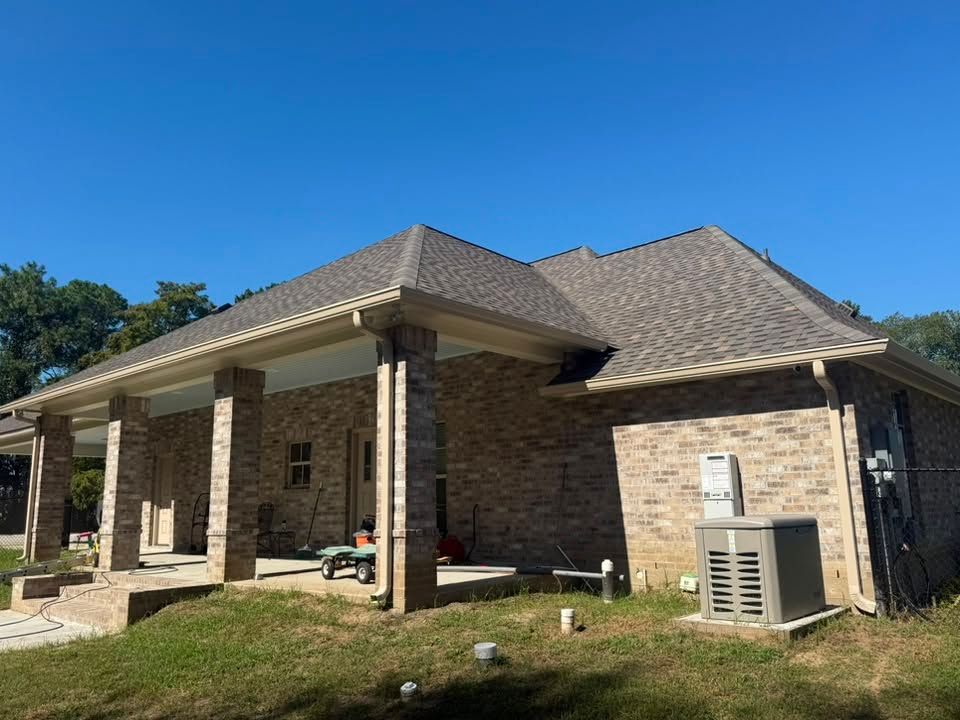

What Gutter Cleaning Actually Accomplishes
The cleaning process involves two distinct phases that address different parts of the system. The first phase is debris removal from the gutter channel itself: leaves, pine straw, and seed pods are cleared by hand before any flushing begins, because running water over packed debris does not remove it—it compacts it further and forces it toward the downspout outlet where it creates a secondary blockage. The second phase is flushing, which uses water pressure to move silt and granules that hand removal cannot capture and then runs through each downspout top to bottom to verify that the elbow and outlet are clear.
After a complete cleaning, downspouts discharge water visibly at grade during rain rather than allowing overflow at the gutter lip, and the ground at the foundation perimeter stays dry instead of developing the saturated band that indicates water is not being carried far enough from the structure. The visual inspection conducted during every cleaning visit by Gator Gutter Service also identifies early-stage issues—a hanger beginning to pull loose, a joint with failing sealant—when addressing them is still a minor repair rather than a component replacement.
How often cleaning is needed depends on the specific tree canopy over and adjacent to the roofline, not on a fixed calendar schedule. Homes with live oak branches extending over the roof typically require two cleanings per year to prevent debris accumulation from reaching the weight that causes hangers to loosen; homes with less direct canopy may manage adequately on a single annual visit. The inspection during each cleaning provides a realistic picture of how quickly debris is building up.
Questions Before Starting Your Project
These questions address what the cleaning process involves and what homeowners can check afterward to confirm the work addressed the full system, not just the visible debris at the top of the gutter.
How is a downspout properly cleared during a gutter cleaning?
Clearing a downspout correctly means running water from the top opening downward through the elbows and outlet—not just flushing from the ground up—because debris compacted at the upper elbow will not dislodge from below and will reblock the downspout within the next rain event.
What debris types are most problematic for Baton Rouge gutters and why?
Shingle granules are the most difficult to remove because they are dense, do not float or blow, and compact into a paste-like layer at gutter low points and downspout elbows that requires direct flushing under pressure rather than simple hand removal.
How do you know a gutter cleaning was completed properly rather than just the surface debris removed?
Running water through the system after cleaning should produce unobstructed flow at every downspout outlet with no overflow at any point in the gutter run; overflow during the water test indicates a remaining blockage that needs to be addressed before the visit is finished.
What does the visual inspection during cleaning actually look for?
The inspection checks for hangers that have begun to separate from the fascia, joints where sealant is cracking or pulling back, sections with visible rust or pitting, and downspout brackets that have loosened—conditions that do not yet cause visible failure but will within one or two more debris cycles.
Why do gutters on some Baton Rouge homes accumulate debris faster than their neighbors at the same address?
Roof pitch directly affects how much debris slides into the gutter versus blowing off the shingle surface; lower-pitch roofs hold debris longer before it migrates to the gutter edge, meaning the gutter receives a larger pulse of material during a rain event rather than a steady trickle.
Gator Gutter Service also cleans gutters in Denham Springs, Prairieville, Gonzales, Livingston, and Ponchatoula. To schedule a cleaning visit that includes a full downspout test and visual inspection, call (985) 662-2755.