
Failing Systems Replaced Before Damage Compounds
Gutter replacement in Baton Rouge for systems with corrosion, structural failure, or deterioration beyond repair
Not every gutter problem is a repair situation. When corrosion has worked through the metal at multiple points, when the gutter profile has collapsed or warped along its length, or when repeated repairs have not stopped the same joint from reopening, replacement is the more cost-effective path—not because repairs are unavailable, but because the material has reached the end of its service life. Gator Gutter Service begins every replacement job in Baton Rouge with an inspection of the existing system to determine the actual scope of failure and confirm that replacement is warranted rather than assumed.
Homes in Ponchatoula and the broader Baton Rouge area include a significant number of properties built in the 1970s and 1980s, when gutters were commonly installed with spike-and-ferrule fasteners driven directly through the gutter face into the fascia. That fastening method loosens over decades of thermal movement and debris loading, and re-driving the original spikes into the same holes no longer provides secure attachment. Replacing a system on a home of that era typically requires switching to clip-style hangers mounted to the fascia separately from the gutter, which means the replacement is also an upgrade in how the system is secured—not just in the material being replaced.
Request a free on-site assessment to determine whether your current system can be repaired or requires full replacement.
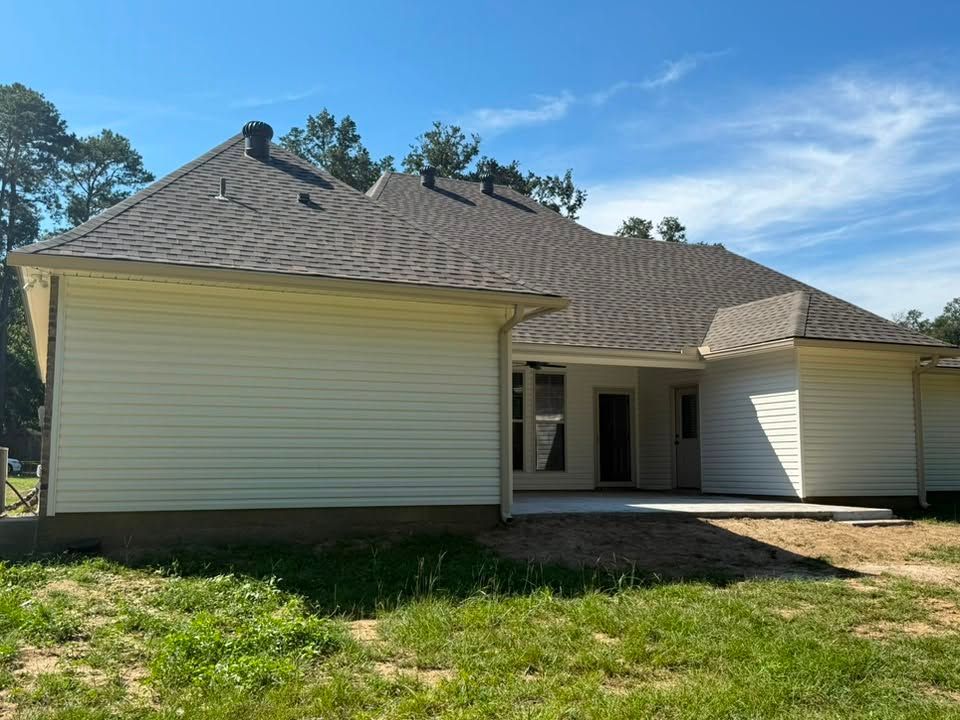

Why Replacement Scope Varies and How Decisions Get Made
The inspection before replacement serves a specific function: it identifies how far the failure extends and whether the fascia behind the old system has been compromised by water running behind the gutter rather than through it. Fascia damage is common when gutters have been failing for more than one season, and replacing the gutter without addressing rotted or delaminated fascia results in a new system that cannot be mounted securely. Gator Gutter Service checks fascia condition as part of the pre-replacement inspection so that scope is fully understood before work begins.
Once the old system is removed and fascia is confirmed sound, the replacement follows the same installation sequencing as a new build: pitch established before hangers are set, downspout locations chosen based on foundation clearance, and the completed system tested with water before the job closes. What you will notice after replacement is that water no longer appears at the foundation perimeter during rain events and that the roofline no longer has sections of gutter visibly pulling away from the fascia or hanging at the wrong angle.
Partial replacement—replacing only the sections that have failed structurally while leaving sound sections in place—is an option when failure is localized rather than system-wide. The inspection determines whether that approach is viable or whether the remaining sections are close enough to failure that full replacement is the more practical decision over a three-to-five-year horizon.
Answers About How the Work Is Done
Homeowners weighing repair against replacement usually have specific questions about what the inspection involves and what distinguishes a system that can be saved from one that cannot. The answers below address those decision points directly.
How is the inspection used to determine whether replacement is the right choice?
The inspection evaluates corrosion depth, deformation of the gutter profile, the condition of joints and end caps, and whether the fascia behind the system has absorbed water damage—when two or more of those conditions are present across multiple sections, replacement is typically more durable than continued repair.
What happens to the fascia behind an old gutter during replacement?
Every section of fascia exposed when the old gutter is removed is checked for softness, delamination, or rot before new hangers are mounted; compromised fascia will not hold hanger clips reliably and needs to be addressed before the new system goes up.
How does the age of a Baton Rouge home affect the replacement process?
Homes built before the mid-1990s often used spike fasteners rather than clip hangers, and the spike holes left in the fascia need to be filled before new hardware is mounted to avoid mounting the replacement into already-weakened wood.
What is the difference between a partial and a full replacement, and how is that decision made?
Partial replacement applies when failure is confined to specific runs with identifiable causes; full replacement is appropriate when the remaining sections show corrosion or deformation that will require the same work within a short time, making a single mobilization the more practical approach.
What should you check in a finished gutter replacement to confirm it was done correctly?
The new gutter should sit flush along the fascia with hangers visible and evenly spaced, downspouts should extend past the foundation line at grade, and a water test should confirm that flow moves toward outlets without pooling at any point in the run.
Gator Gutter Service also performs gutter replacement in Denham Springs, Prairieville, Gonzales, Livingston, and Ponchatoula. To schedule a no-cost inspection of your current system, call (985) 662-2755.